
Baby & Kids T-Shirts
 This item is discontinued.
Explore similar products from our collection.
-
Bonfino Cotton Knit Full Sleeves Regular Round Neck Henley T-Shirts With Solid And Stripes Print Pack Of 3 - Blue & Beige
Regular priceRs. 1,199.00Regular price Rs. 971.19Regular priceUnit price perRs. 1,199.00Sale price Rs. 971.19 19%Sale -
Bonfino 100% Cotton Knit Yarn Dyed Striped T-Shirts with Half Sleeves and Bear Print Pack of 3 - White Light Blue
Regular priceRs. 1,099.00Regular price Rs. 868.21Regular priceUnit price perRs. 1,099.00Sale price Rs. 868.21 21%Sale -
Bonfino Cotton Knit Full Sleeves T-Shirt With Pasta Print - White
Regular priceRs. 399.00Regular price Rs. 355.11Regular priceUnit price perRs. 399.00Sale price Rs. 355.11 11%Sale -
Bonfino 100% Cotton Woven Half Sleeves Drop Shoulder Double Gauze Polo T-Shirt with Oversized Pocket - Navy Blue
Regular priceRs. 699.00Regular price Rs. 615.12Regular priceUnit price perRs. 699.00Sale price Rs. 615.12 12%Sale -
Bonfino 100% Cotton Woven Half Sleeves Drop Shoulder Double Gauze Polo T-Shirt with Oversized Pocket - Off White
Regular priceRs. 699.00Regular price Rs. 503.28Regular priceUnit price perRs. 699.00Sale price Rs. 503.28 28%Sale -
Bonfino 100% Cotton Knit Half Frill Sleeves T-Shirts with Polka Dot & Unicorn Print Pack of 2 - Pink & Lavender
Regular price Rs. 799.00Rs. 799.00Unit price perSale -
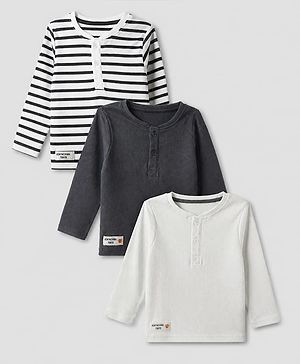
Bonfino Cotton Elastane Lycra Rib Knit Yarn Dyed and Solid T-Shirts with Full Sleeves and Stripes with Konichiwa Tokyo Text Patch Pack of 3 - Grey White
Regular priceRs. 1,299.00Regular price Rs. 1,052.19Regular priceUnit price perRs. 1,299.00Sale price Rs. 1,052.19 19%Sale -
Bonfino Cotton Knit T-Shirts Half Sleeve With Beach Theme Print Pack Of 5 Multi color 9-12 Months
Regular priceRs. 1,499.00Regular price Rs. 995.04Regular priceUnit price perRs. 1,499.00Sale price Rs. 995.04 34%Sale -
Bonfino Cotton Knit Full Sleeves Striped Collar T-Shirt - Beige
Regular priceRs. 499.00Regular price Rs. 444.11Regular priceUnit price perRs. 499.00Sale price Rs. 444.11 11%Sale -
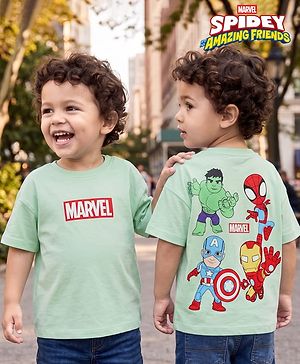
Bonfino Marvel 100% Cotton Interlock Knit Half Sleeves T-Shirt with Drop Shoulder Sleeves and Marvel Print - Light Green
Regular priceRs. 499.00Regular price Rs. 444.11Regular priceUnit price perRs. 499.00Sale price Rs. 444.11 11%Sale -

Bonfino 100% Cotton Knit T-Shirts with Half Sleeves and Cherry Print in Pink Red & White - Pack of 3
Regular priceRs. 1,099.00Regular price Rs. 868.21Regular priceUnit price perRs. 1,099.00Sale price Rs. 868.21 21%Sale -
Bonfino 100% Cotton Knit Full Sleeves T-Shirts with Bear Applique in Beige Brown Pack of 3
Regular priceRs. 1,199.00Regular price Rs. 959.20Regular priceUnit price perRs. 1,199.00Sale price Rs. 959.20 20%Sale





Kids T-Shirts for Everyday Comfort and Style
Finding comfortable and easy-to-wear clothing is an important part of dressing growing children. A good T-shirt should feel soft against the skin, allow free movement and suit the needs of everyday activities. From relaxed fits to smart polo styles, kids T-shirts are available in different designs, fabrics, colours and sleeve lengths to suit changing preferences and weather conditions.
At Bonfino, the kids T-shirt collection brings together a variety of styles for babies and young children. Parents can browse regular-fit, oversized and polo T-shirts, along with printed, striped and solid designs. With options in cotton and cotton-blend fabrics, different necklines and single pieces or multipacks, the collection offers choices for different wardrobe needs. Understanding fabric, fit, size and construction can help you select T-shirts that keep your child comfortable throughout the day.
Types of T-Shirts for Kids
Kids T-shirts come in different fits and styles. Choosing the right type depends on your child comfort preferences, wardrobe needs and the amount of coverage you want.
Regular-Fit T-Shirts
Regular-fit T-shirts have a balanced shape that is neither too tight nor excessively loose. They offer room for comfortable movement while maintaining a neat everyday appearance. This style is a versatile choice for children and can be included in their regular clothing rotation.
When choosing a regular-fit T-shirt, check the chest, shoulder and garment length measurements. The fabric should allow your child to move comfortably without pulling or feeling restrictive.
Oversized T-Shirts
Oversized T-shirts have a relaxed silhouette with extra room through the body and sleeves. They offer a casual look and may appeal to children who prefer loose-fitting clothing.
Although oversized styles are designed to have a relaxed fit, the garment should still allow easy movement. Check the shoulder placement, sleeve length and overall measurements to ensure the T-shirt is not excessively large for your child.
Polo T-Shirts
Polo T-shirts usually feature a collar and a front opening with buttons or another fastening detail. They have a slightly structured appearance while retaining the comfort of a casual top. Their design makes them suitable for children who need clothing that looks a little more dressed up without requiring a formal outfit.
Check the collar construction and front opening to ensure that the neckline feels comfortable and does not make dressing difficult.
Printed T-Shirts
Printed T-shirts feature decorative designs applied to the fabric. They may have placement prints, all-over patterns or other graphic details. These styles add variety to a child wardrobe and allow parents to choose designs that reflect personal preferences.
When buying printed T-shirts, check the print finish and washing instructions. Following the recommended care guidance can help maintain the appearance of the design.
Solid T-Shirts
Solid T-shirts have a single-colour appearance without an all-over printed pattern. Their simple design makes them easy to coordinate with different types of bottoms. They can also be useful when parents want versatile everyday clothing that works across different settings.
How to Choose the Right Fabric for Kids T-Shirts
Fabric plays an important role in how a T-shirt feels, fits and performs during everyday wear. Children spend much of their time moving, playing and learning, so clothing should feel comfortable and allow enough flexibility. Consider the fabric composition and construction before choosing a T-shirt.
Cotton T-Shirts
Cotton is commonly used in everyday clothing because of its soft feel and breathable nature. Cotton T-shirts can be a comfortable choice for regular wear, particularly when the fabric has a suitable weight and construction for the weather.
- Look for a soft fabric feel that is comfortable against the skin.
- Check the fabric composition to understand how much cotton the garment contains.
- Consider the thickness and construction when choosing clothing for different seasons.
- Follow the care label to maintain the fabric quality.
Cotton-Blend T-Shirts
Cotton-blend fabrics combine cotton with other fibres. The final feel, stretch, durability and care requirements depend on the fibres used and their proportions. Some blends may offer additional flexibility or help a garment retain its shape.
Always check the composition label rather than assuming that all cotton-blend T-shirts have the same properties. The percentage of each fibre can affect how the garment feels and how it should be washed.
Knit and Woven Fabrics
Fabric construction also affects the way a T-shirt feels and moves. Knit fabrics are made using interconnected loops of yarn and are commonly used in casual clothing. Their flexibility can make them suitable for garments that need to accommodate movement.
Woven fabrics are made by interlacing yarns and generally have a different structure from knitted fabrics. Their flexibility depends on the fibre composition and construction. Check the product details to understand the fabric type and the level of stretch available.
How to Choose the Correct T-Shirt Size for Your Child
A well-fitting T-shirt should provide enough room for comfortable movement without looking excessively loose. Choosing the correct size is especially important for growing children, as a garment that is too tight may feel restrictive, while one that is too large may interfere with everyday activities.
Measure Your Child Before Buying
Use a soft measuring tape to take your child measurements. Compare them with the size chart provided for the garment rather than relying only on age recommendations.
- Chest: Measure around the fullest part of the chest, keeping the tape comfortably level.
- Shoulder: Measure across the shoulder area to understand the garment width required.
- Body length: Check the distance from the highest shoulder point to the desired hem length.
- Sleeve length: Consider the sleeve measurement when choosing between different sleeve styles.
Kids T-Shirt Size Guide
Choosing the right T-shirt size helps your child stay comfortable throughout the day. A well-fitting T-shirt should provide enough room around the chest and shoulders while allowing free movement. Use the following general size guide to understand the approximate measurements for babies and young children.
Kids T-Shirt Size Chart by Age
| Age Group | Approx. Height | Chest Measurement | Suggested Size |
|---|---|---|---|
| 3–6 months | 61–68 cm | 43–45 cm | 3–6M |
| 6–9 months | 68–74 cm | 45–47 cm | 6–9M |
| 9–12 months | 74–80 cm | 47–49 cm | 9–12M |
| 12–18 months | 80–86 cm | 49–51 cm | 12–18M |
| 18–24 months | 86–92 cm | 51–53 cm | 18–24M |
| 2–3 years | 92–98 cm | 53–55 cm | 2–3Y |
| 3–4 years | 98–104 cm | 55–57 cm | 3–4Y |
| 4–5 years | 104–110 cm | 57–59 cm | 4–5Y |
| 5–6 years | 110–116 cm | 59–61 cm | 5–6Y |
Note: These are approximate body measurements for general guidance and are not verified Bonfino garment measurements. Actual sizes may vary depending on the brand, fabric and T-shirt fit. Always check the individual product size chart before purchasing.
Check the Fit Around the Chest and Shoulders
The T-shirt should sit comfortably across the shoulders without pulling or dropping excessively. There should be enough room around the chest for natural movement. Pay attention to the armholes and sleeves, as a tight fit in these areas can make active movement uncomfortable.
Consider Your Child Growth
Children grow at different rates, so age-based sizing may not always provide the right fit. If your child is between sizes, compare the garment measurements and consider the intended fit. Avoid choosing a size that is so large that it affects comfort or movement.
Check the Size Chart Carefully
Size labels can vary between brands and garment styles. Always refer to the size chart associated with the product you are considering. Check whether the measurements refer to the child body or the garment itself, as these are not the same.
Half-Sleeve vs Full-Sleeve T-Shirts for Kids
Sleeve length affects the amount of coverage a T-shirt provides. The right option depends on the weather, indoor or outdoor use and your child clothing preferences.
| Feature | Half-Sleeve T-Shirts | Full-Sleeve T-Shirts |
|---|---|---|
| Coverage | Cover the shoulder and upper arm. | Provide coverage along most or all of the arm. |
| Weather suitability | Often preferred for warm weather and everyday casual wear. | Can provide additional coverage in cooler conditions. |
| Movement | Leave more of the arm uncovered. | Should provide enough sleeve room for comfortable movement. |
| Styling | Suitable for casual and everyday outfits. | Can be worn as a standalone top or layered when appropriate. |
| Buying consideration | Check the sleeve opening and shoulder fit. | Check sleeve length and wrist opening for a comfortable fit. |
Neither sleeve length is suitable for every situation. Consider the temperature, fabric thickness and your child comfort when choosing between half-sleeve and full-sleeve T-shirts.
Understanding T-Shirt Necklines and Openings
The neckline affects the appearance of a T-shirt as well as how easily it can be worn and removed. Parents should consider the opening, collar construction and overall comfort when selecting a style for their child.
Round-Neck T-Shirts
Round-neck T-shirts have a curved neckline that sits around the base of the neck. They are a common choice for casual clothing. Check that the neckline has enough room for comfortable dressing and does not feel tight around the neck.
Polo-Neck T-Shirts
Polo-neck T-shirts have a collar and usually feature a short front opening. The collar gives the garment a more structured appearance. Check the fastening and collar construction to ensure that they are comfortable and easy to manage.
Henley T-Shirts
Henley T-shirts have a round neckline with a short front opening, generally finished with buttons or another fastening. The opening changes the appearance of the neckline and may make dressing easier, depending on the garment construction.
Printed, Striped and Solid T-Shirts: What Should You Choose?
T-shirt designs can influence how easily a garment fits into your child wardrobe. The right choice depends on personal preference, the existing clothing collection and the intended use.
| T-Shirt Design | Appearance | What to Consider |
|---|---|---|
| Printed T-shirts | Feature graphic or decorative designs. | Check the print finish and washing instructions. |
| Striped T-shirts | Have repeated lines or bands across the fabric. | Check the fabric and pattern placement. |
| Solid T-shirts | Have a single-colour design. | Consider colour preferences and wardrobe coordination. |
| Embroidered T-shirts | Feature stitched decorative details. | Check the inside finish and ensure that the stitching feels comfortable. |
Regardless of the design, the fabric, fit and construction should remain the main considerations. Decorative details should not cause irritation or restrict movement.
Single T-Shirts vs Multipacks: What Should Parents Consider?
Kids T-shirts may be available individually or in multipacks. The right option depends on how many garments your child needs, the available sizes and the variety included in the pack.
Buying Individual T-Shirts
Individual T-shirts allow parents to choose specific styles, colours and sizes. This can be useful when you want to add a particular design to an existing wardrobe or need to replace a specific garment.
Buying T-Shirt Multipacks
Multipacks contain more than one T-shirt and may offer a convenient way to add several everyday garments to a child wardrobe. Before purchasing, check the number of pieces, size consistency, colour options and fabric composition.
Compare the total pack price with the number of garments included. Also consider whether all pieces in the pack meet your child comfort and wardrobe requirements.
How to Care for Kids T-Shirts
Regular washing and proper storage can help maintain the appearance and condition of children clothing. Care requirements vary according to fabric composition, prints and decorative details, so always follow the garment care label.
- Read the care label: Check the recommended washing temperature and cleaning instructions before washing.
- Sort by colour: Separate light and dark garments to help reduce colour transfer.
- Use a suitable detergent: Choose a detergent appropriate for the fabric and follow the recommended quantity.
- Turn printed T-shirts inside out: This can help reduce direct friction on printed surfaces during washing.
- Avoid excessive heat: Follow the drying instructions to reduce the risk of shrinkage or fabric damage.
- Handle decorative details carefully: Check embroidered or embellished areas before washing.
- Store garments properly: Keep clean, dry T-shirts folded or arranged in a way that helps maintain their shape.
What to Check Before Buying T-Shirts for Kids
Before choosing a T-shirt, review the product information and consider how the garment will be used. These checks can help you make a more informed purchase.
- Fabric composition: Check the material and fibre percentages to understand the garment construction.
- Size and measurements: Compare the size chart with your child measurements.
- Fit: Choose a fit that allows comfortable movement.
- Neckline: Check the opening and construction for easy dressing.
- Sleeve length: Consider the coverage and weather suitability.
- Stitching: Look for neat seams and a comfortable inside finish.
- Print and embroidery: Check that decorative details are securely finished and do not feel uncomfortable.
- Care instructions: Review the washing and drying requirements.
- Pack details: For multipacks, confirm the number of pieces and available sizes.
Choosing Comfortable Everyday T-Shirts for Growing Children
Kids T-shirts are useful wardrobe essentials because they can be worn across different everyday activities and paired with a variety of bottoms. The right choice should balance comfort, fit, fabric and ease of care. Parents should pay attention to garment measurements, neckline construction, sleeve length and fabric composition instead of relying on appearance alone.
Explore the kids T-shirt collection at Bonfino to compare different styles, colours, prints, fits and pack options. Reviewing the product details and size information can help you choose clothing that suits your child needs and everyday wardrobe.
Frequently Asked Questions About Kids T-Shirts
1. How do I choose the right T-shirt size for my child?
Measure your child chest, shoulders and body length, then compare the measurements with the product size chart. Check the garment fit and avoid relying only on age-based sizing.
2. Are cotton T-shirts comfortable for everyday wear?
Cotton T-shirts can be comfortable for everyday wear because cotton is generally soft and breathable. Check the fabric composition, thickness and construction before choosing one.
3. What is the difference between cotton and cotton-blend T-shirts?
Cotton T-shirts use cotton as their main fabric, while cotton-blend T-shirts combine cotton with other fibres. The blend can affect stretch, feel, shape retention and care requirements.
4. How should a kids T-shirt fit?
A kids T-shirt should sit comfortably around the shoulders and chest while allowing free movement. The sleeves and body length should provide suitable coverage without feeling restrictive.
5. Should I buy a bigger T-shirt for my growing child?
A little extra room can allow comfortable movement and accommodate growth. However, avoid buying a T-shirt that is excessively large, as it may affect comfort and everyday activities.
6. What is the difference between regular-fit and oversized T-shirts?
Regular-fit T-shirts have a balanced shape with moderate room through the body. Oversized T-shirts have a looser silhouette with additional room around the body and sleeves.
7. Are oversized T-shirts suitable for young children?
Oversized T-shirts can be suitable when the garment length, sleeves and overall fit allow comfortable movement. Check the measurements to ensure that the T-shirt is not excessively loose.
8. What is the difference between round-neck and Henley T-shirts?
Round-neck T-shirts have a simple curved neckline, while Henley T-shirts have a round neckline with a short front opening. The opening may feature buttons or another fastening.
9. Are polo T-shirts suitable for everyday wear?
Polo T-shirts can be worn for everyday activities when their fabric and fit are comfortable. Check the collar, neckline and front fastening to ensure they suit your child.
10. Which is better for children, half-sleeve or full-sleeve T-shirts?
Both can be useful depending on the weather and desired coverage. Half sleeves leave more of the arm uncovered, while full sleeves provide additional coverage.
11. Are full-sleeve T-shirts suitable for summer?
Full-sleeve T-shirts can be worn in summer when they are made from a lightweight, comfortable fabric. Consider the fabric thickness, breathability and outdoor temperature.
12. What fabric should I look for when buying baby T-shirts?
Look for a soft fabric with a comfortable finish and suitable construction. Check the fibre composition, seams, neckline and care instructions before choosing a T-shirt.
13. Do cotton T-shirts shrink after washing?
Cotton T-shirts may shrink depending on the fabric treatment and washing conditions. Follow the care label, use the recommended washing temperature and avoid excessive heat during drying.
14. How can I prevent printed T-shirts from fading?
Follow the washing instructions, turn printed T-shirts inside out when permitted and avoid excessive heat. Suitable washing and drying methods can help maintain the print appearance.
15. How should I wash cotton T-shirts for kids?
Check the care label before washing. Sort garments by colour, use a suitable detergent and follow the recommended washing temperature and drying instructions.
16. Are knit T-shirts stretchable?
Knit fabrics have a looped construction that can provide flexibility. The amount of stretch depends on the fibre composition, knit structure and whether elastic fibres are included.
17. What is the difference between knit and woven T-shirts?
Knit fabrics are made using interconnected loops of yarn, while woven fabrics are made by interlacing yarns. Their stretch, structure and feel depend on the construction and fibres used.
18. Are kids T-shirt multipacks worth buying?
Multipacks can be convenient when you need several everyday T-shirts. Compare the total price, number of pieces, fabric composition, size options and designs before purchasing.
19. How many T-shirts should a child have?
The number depends on your child age, daily routine, laundry frequency and wardrobe needs. Keep enough comfortable T-shirts for regular changes without buying more than required.
20. How do I choose T-shirts for children with sensitive skin?
Check the fabric composition, inside seams, labels and decorative finishes. Choose a comfortable fabric and follow the washing instructions to help keep the garment clean and suitable for regular wear.
21. What should I check before buying printed T-shirts?
Check the fabric, print finish, stitching and washing instructions. Make sure the printed area does not feel rough or uncomfortable against your child skin.
22. How do I measure my child for a T-shirt?
Measure around the chest, across the shoulders and from the highest shoulder point to the desired body length. Compare these measurements with the product size chart.
23. Should a T-shirt have extra room around the chest?
A T-shirt should have enough room around the chest for comfortable breathing and movement. Avoid a tight fit that pulls across the body or restricts arm movement.
24. How can I choose comfortable T-shirts for active children?
Look for a suitable fit, comfortable fabric, smooth seams and sleeves that allow free movement. Check the neckline and garment length to ensure they do not restrict everyday activities.
25. What should I check in the neckline and shoulder opening of a baby T-shirt?
Check that the neckline provides enough room for dressing and does not feel tight. Review the opening and fastening details to ensure that the garment can be put on and removed comfortably.
26. Are solid-colour T-shirts easy to style?
Solid-colour T-shirts have a simple design that can be coordinated with different bottoms. Their versatility makes them useful additions to a child everyday wardrobe.
27. What should I consider when choosing striped T-shirts for kids?
Check the fabric composition, fit, stitching and pattern placement. The T-shirt should feel comfortable and provide enough room for natural movement.
28. How do I check the quality of a kids T-shirt?
Review the fabric composition, stitching, seams, neckline, sleeve finish and overall construction. Also check the care label and product details before making a purchase.
29. Can kids wear cotton-blend T-shirts in warm weather?
Suitability depends on the fibre composition, fabric weight and construction. Check the material details and choose a fabric that feels comfortable for the prevailing temperature.
30. What should I check when buying a T-shirt multipack?
Check the number of pieces, available sizes, fabric composition, colours and individual garment details. Compare the pack price with your child wardrobe requirements before purchasing.